
Laplace stress-tests robots and autonomous vehicles in simulation before the real world
Laplace Intelligence is building interactive simulations and automated red-team agents to identify dangerous edge cases in physical AI systems before deployment.
AT A GLANCE
Key points
- Deliberately challenges robots and autonomous vehicles in high-fidelity simulation
- Environments are reconstructed from maps, street imagery and traffic data
- Red-team agents can generate edge cases from news and collision reports
- Provider claims still require validation on real hardware and operating conditions
What is changing?
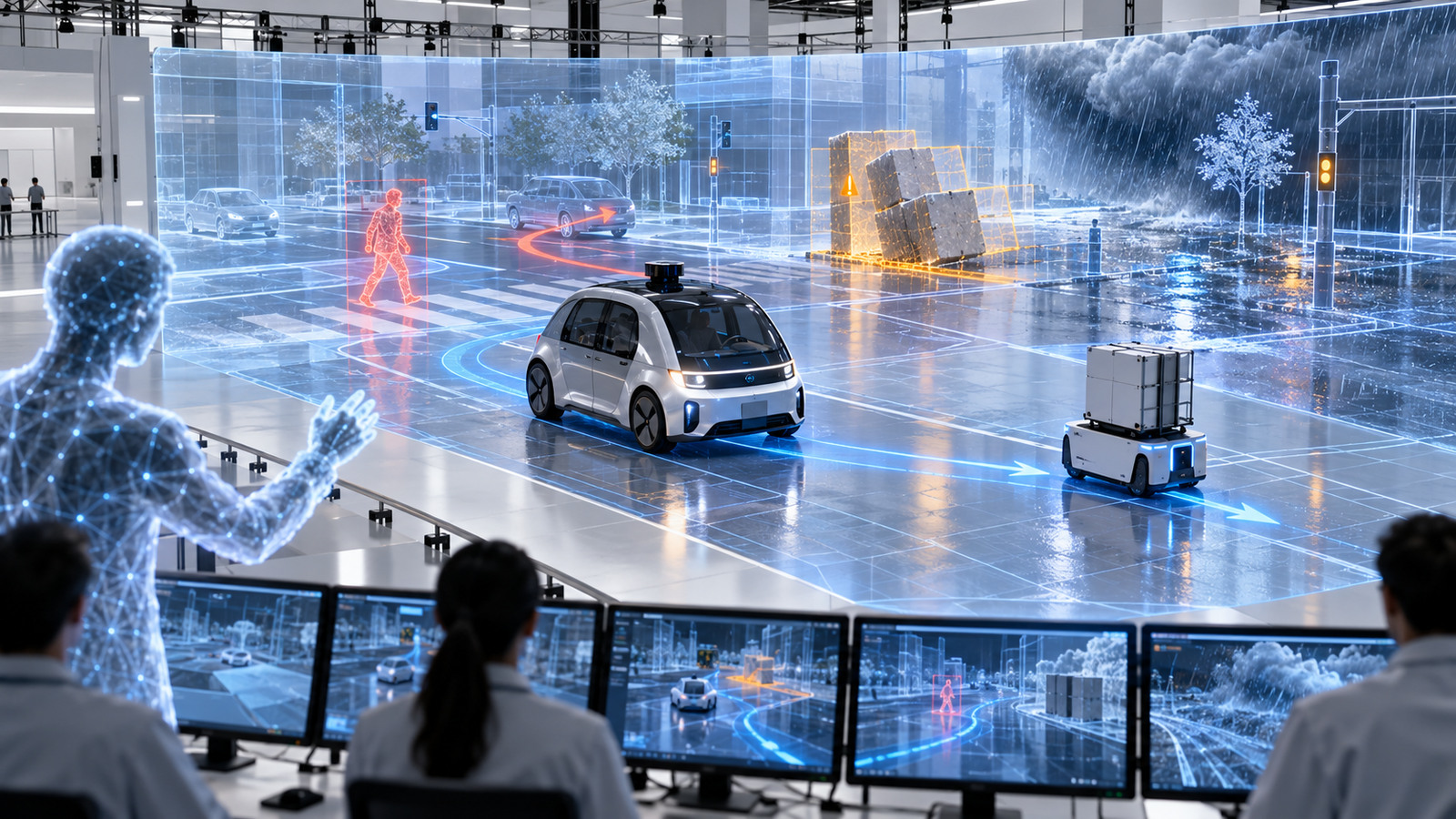
Laplace Intelligence detailed its automated red-teaming platform for robots, autonomous vehicles and smart-city systems on October 19. The system is designed to deliberately challenge physical AI inside high-fidelity simulations reconstructed from the real world, identifying failures and safety weaknesses before deployment.
According to TechCrunch, the platform’s simulation environment is based on a post-trained version of NVIDIA Cosmos. It can build environments to scale from maps, street imagery and traffic data, while language commands can change traffic density or weather conditions. Simulated vehicles and pedestrians also react to test scenarios.
Laplace’s agents can produce rare edge cases from news reports, collision records and other sources, then continuously probe the system. The company still operates mostly through project-based engagements, so claimed safety gains should be independently validated on each customer’s real hardware and operating conditions.
Explore the original sources
Source date: 19 October 2026.
Published by AI Radar: 20 Oct 2026, 08:06 (Istanbul, UTC+3).
FOLLOW THE TOPIC
Topics and tags
Share your discovery.
Send this story to a friend.
Reader comments
What do you think about this development? Share your experience or question. Comments are published after editorial approval.
Your name/nickname and comment become public if approved. Read: Privacy notice.




Loading comments…