
NVIDIA Hyperion brings European autonomous-vehicle programs onto a shared platform
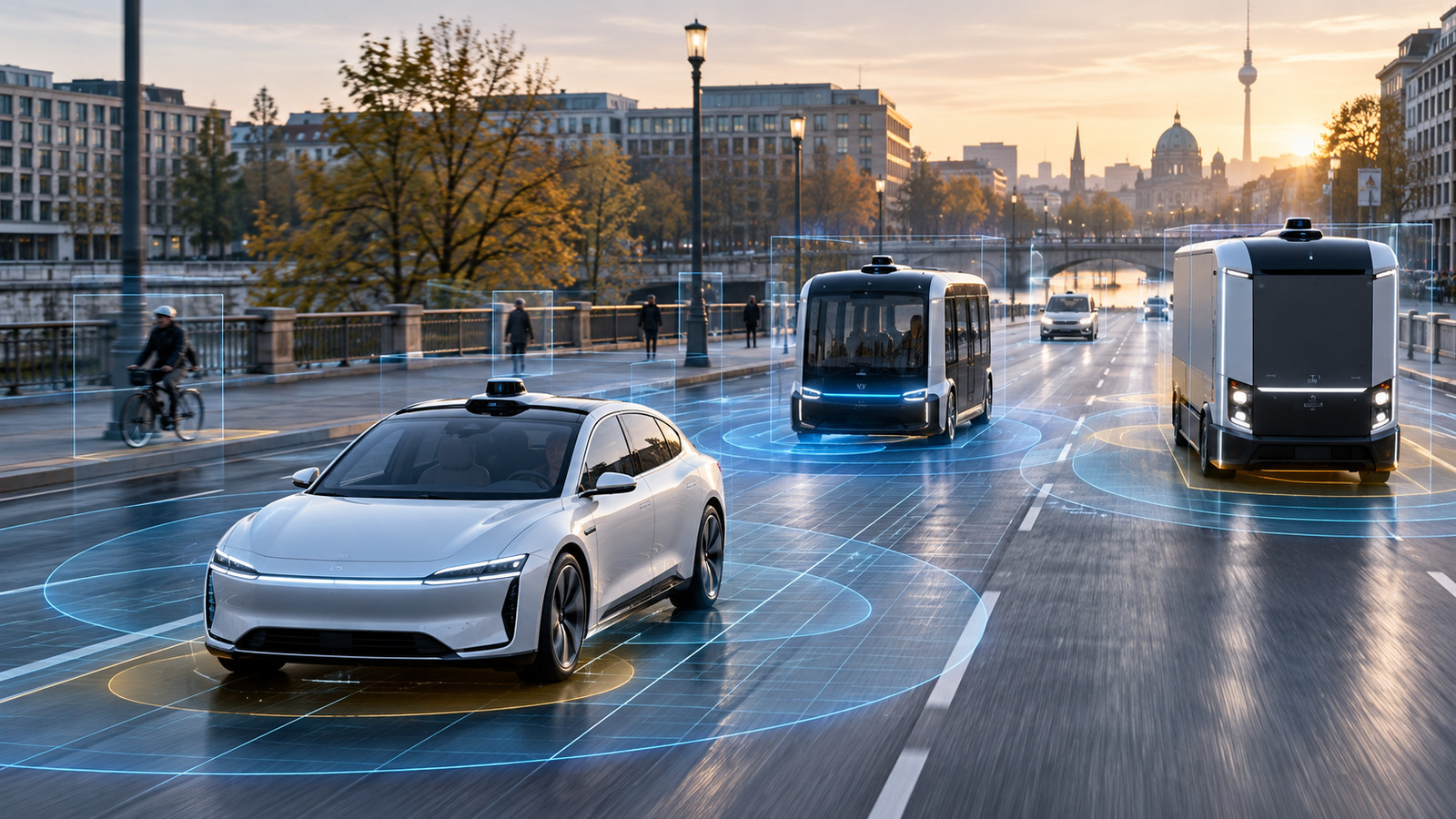
European automakers and mobility providers are developing level 3–4 driving and robotaxi programs on NVIDIA Hyperion-based systems.
AT A GLANCE
Key points
- Bolt is developing its European robotaxi program on Hyperion
- Volvo Cars is adopting Hyperion with Alpamayo Stack for future vehicles
- Halos SAFE connects simulation and physical testing through measurable scenarios
What is changing?
NVIDIA says European automakers and mobility providers are developing a range of autonomous-driving programs on the Hyperion computing platform. Bolt with Lucid, Mercedes-Benz, Volkswagen Commercial Vehicles, and Einride are showcasing selected level 3 and level 4 use cases, while Volvo Cars is adopting Hyperion and Alpamayo Stack for future vehicles.
Bolt selected Alpamayo Stack for its European robotaxi program and plans to begin real-world driving-data collection in Madrid in 2027, subject to regulatory approval. Volkswagen Commercial Vehicles is presenting its autonomous ID. Buzz platform, while Einride is building its next-generation autonomous freight driver on Hyperion. NVIDIA says the platform can work with both its own and partner driving software.
NVIDIA also introduced the Halos SAFE safety-evaluation framework. It is designed to connect simulation, software- and hardware-in-the-loop testing, on-road trials, and fleet monitoring through measurable scenarios. Dates and scale targets remain forward-looking and dependent on approvals and development outcomes.
Explore the original sources
Source date: 21 October 2026.
Published by AI Radar: 22 Oct 2026, 13:03 (Istanbul, UTC+3). Updated: 22 Oct 2026, 14:27.
FOLLOW THE TOPIC
Topics and tags
Share your discovery.
Send this story to a friend.
Reader comments
What do you think about this development? Share your experience or question. Comments are published after editorial approval.
Your name/nickname and comment become public if approved. Read: Privacy notice.





Loading comments…