
Google Antigravity unifies antimicrobial peptide search in one agent session
Google DeepMind says Antigravity and ProtNLM scanned millions of uncharacterized proteins and identified a new antimicrobial peptide candidate now moving through lab validation.
AT A GLANCE
Key points
- ProtNLM scans millions of uncharacterized proteins for function
- The example narrowed a 97-amino-acid bacteriocin candidate
- Candidates have entered wet-lab validation
- A new 3D viewer gives researchers and the agent a shared workspace
What is changing?
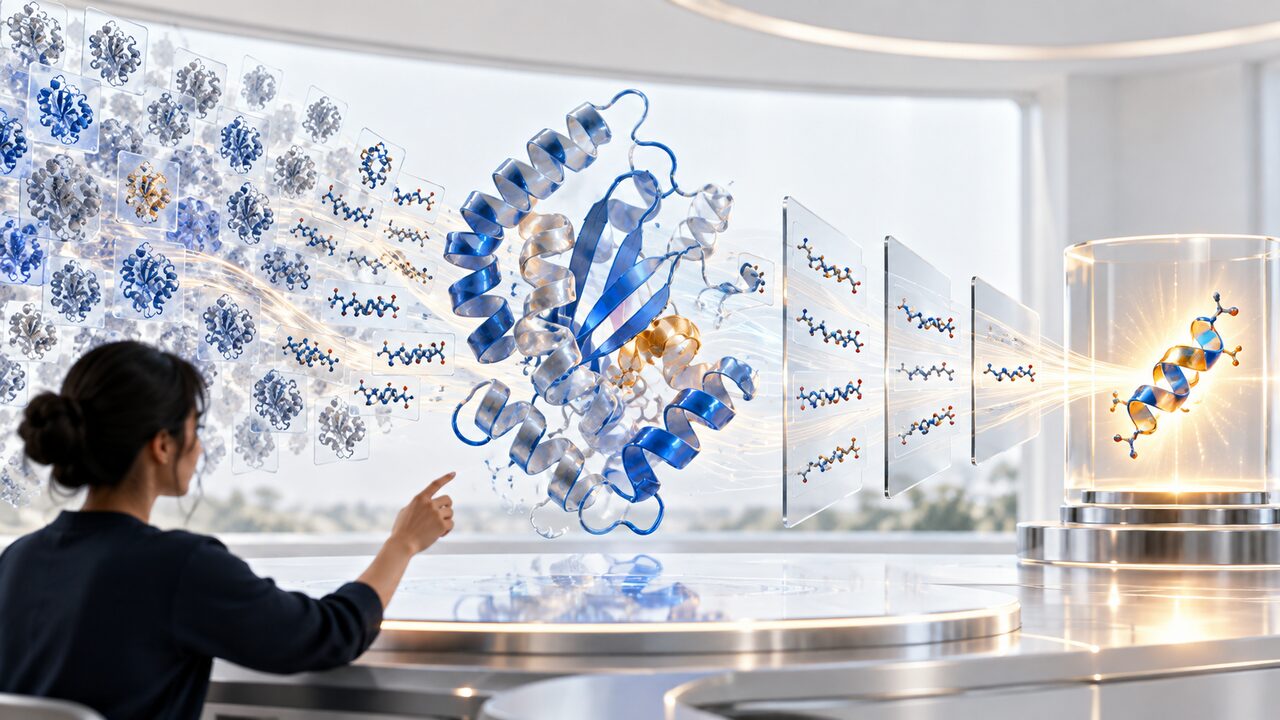
Google DeepMind described on October 15 how Google Antigravity was used to search for new antimicrobial peptides. The agentic science workspace uses ProtNLM to scan millions of proteins with unknown functions in UniProt, then narrows candidates through database queries, structural analysis, and literature synthesis under a researcher’s direction.
In the technical example, the team identified a 97-amino-acid bacteriocin candidate in Streptococcus pseudopneumoniae. The agent examined Swiss‑Prot similarities, its AlphaFold structure, genomic neighborhood, and a possible mechanism of action together. DeepMind says the candidate has predicted activity against pathogens associated with respiratory tract infections.
This is not yet a drug discovery: the candidate and other molecules found through the same process are undergoing wet-lab validation. Antigravity’s new Biomolecular Structure Viewer also lets the researcher and agent mark and discuss regions on the same 3D protein structure.
Explore the original sources
Source date: 15 October 2026.
Published by AI Radar: 16 Oct 2026, 06:07 (Istanbul, UTC+3).
FOLLOW THE TOPIC
Topics and tags
Share your discovery.
Send this story to a friend.
Reader comments
What do you think about this development? Share your experience or question. Comments are published after editorial approval.
Your name/nickname and comment become public if approved. Read: Privacy notice.





Loading comments…