
NTT’s physics-based world model tests robot actions before movement
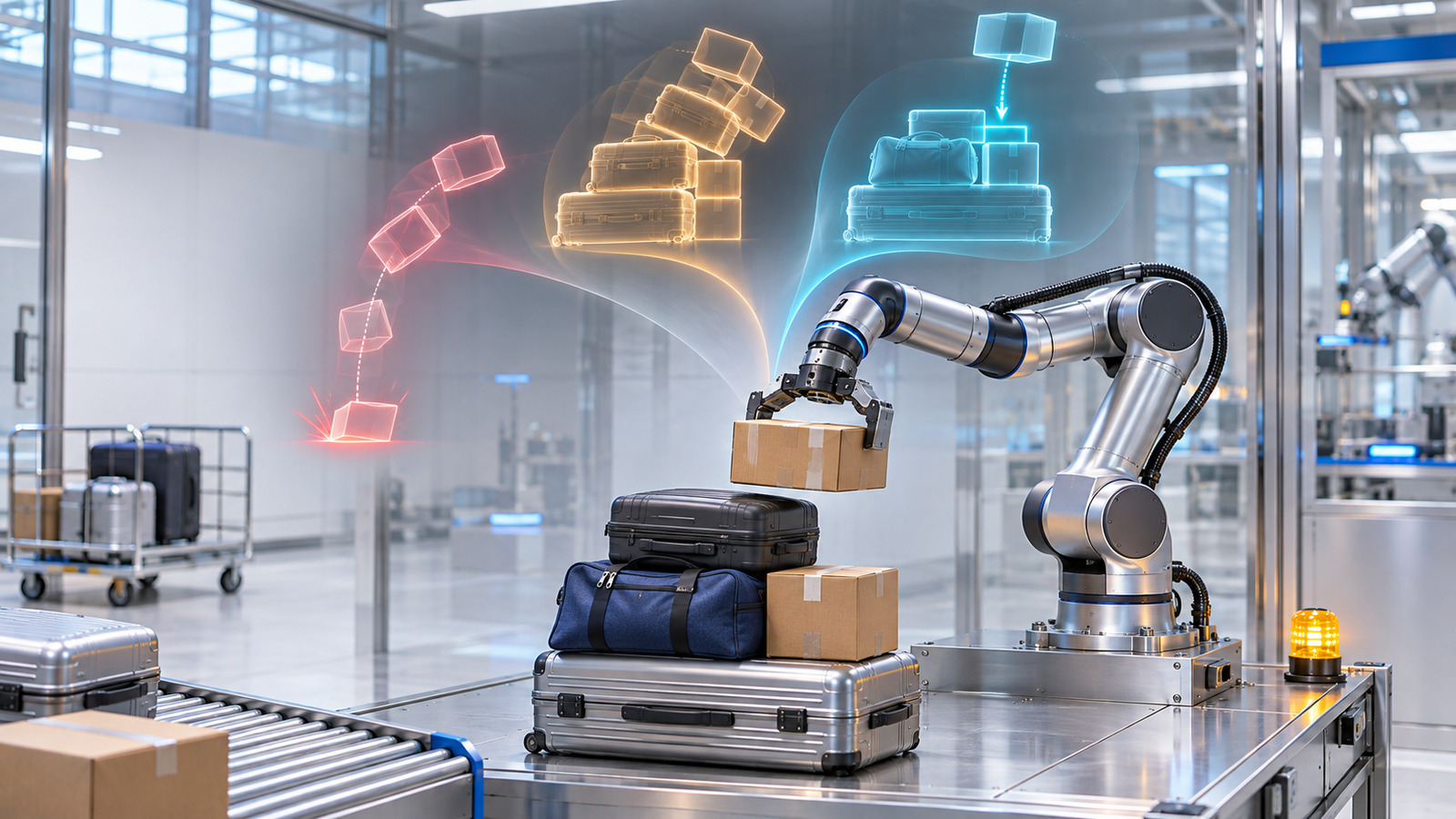
NTT developed a physics-based world model that predicts candidate robot actions as video before execution and evaluates risks such as dropped objects or collapsing loads.
AT A GLANCE
Key points
- The model evaluates multiple candidate futures as video before the robot moves.
- NTT reports that shelf-loading success increased from 73.1% to 92.3%.
- The first field target is airport baggage handling with Mujin.
What is changing?
NTT announced physical AI technology that predicts the future outcome of multiple candidate actions produced by robot-control software before the robot moves. The system connects a “physics control adapter,” which explicitly represents physical quantities such as position, orientation, velocity and mass, to a video-generation model. It produces future video for each candidate action, evaluates collisions, dropped objects and load collapse, and ranks the option considered most likely to succeed.
In an NTT-reported shelf-loading test with a small robot, the task success rate increased from 73.1% to 92.3%. The company also reported better results than conventional methods on the OBJ3D benchmark; these are provider test results rather than independent field validation. The first target is loading and unloading airport baggage of varied shapes and weights. NTT plans field trials with Mujin and is considering expansion into logistics, manufacturing, construction and retail.
Explore the original sources
Source date: 11 November 2026.
Published by AI Radar: 11 Nov 2026, 14:08 (Istanbul, UTC+3).
FOLLOW THE TOPIC
Topics and tags
Share your discovery.
Send this story to a friend.
Reader comments
What do you think about this development? Share your experience or question. Comments are published after editorial approval.
Your name/nickname and comment become public if approved. Read: Privacy notice.





Loading comments…