
OpenAI brings Astra and Codex into physical product engineering
OpenAI published new physical-engineering work showing how Astra and Codex can support mechanical design, electronics, CAD, simulation and manufacturing drawings.
AT A GLANCE
Key points
- Astra designed a prototype spanning enclosure, PCB and software integration.
- Model use across OpenAI hardware teams has grown 23-fold since February.
- Production tolerances and assembly details still require human review.
What is changing?
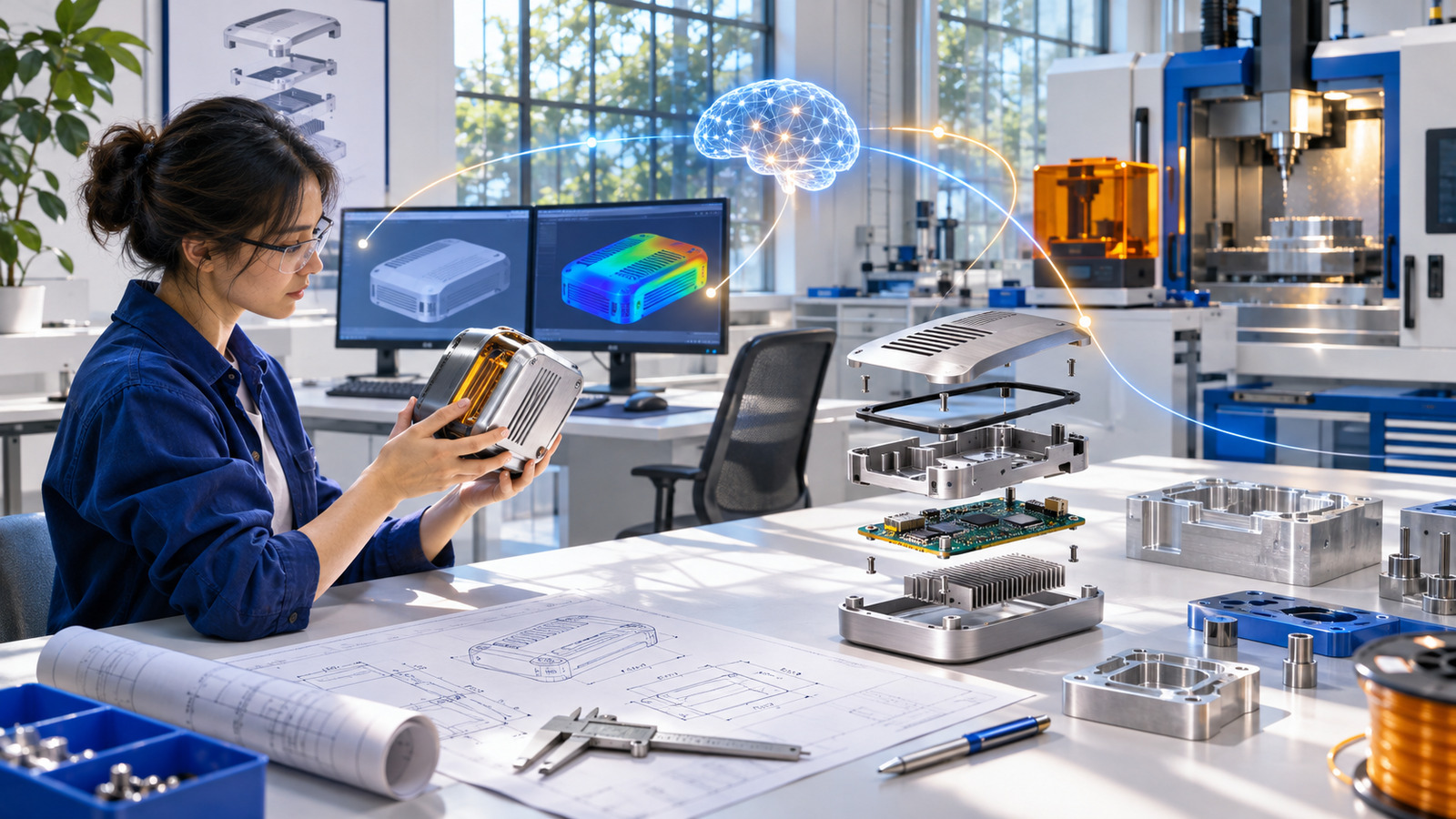
OpenAI described on November 3 how its models are being used across mechanical and electrical engineering and end-to-end system design. One experiment used GPT‑6 to define requirements while Astra prepared the enclosure, printed circuit board and software integrations for a device that lets users talk to Codex. Two team members designed it in under a week, and a contract manufacturer produced a small batch in under a month.
The result was not autonomous manufacturing. OpenAI says Astra did not consistently account for production limits, tolerances or assembly details, so several rounds of human review and iteration were still required. Token-measured model use across OpenAI’s hardware teams has grown 23-fold since February.
OpenAI is also expanding work with Chip Ganassi Racing on converting scans into editable CAD and manufacturing drawings, and starting a research collaboration with Mazda on aerodynamics and crash-safety design. Both programs retain engineering review, manufacturability checks and simulation validation.
Explore the original sources
Source date: 3 November 2026.
Published by AI Radar: 3 Nov 2026, 22:09 (Istanbul, UTC+3).
FOLLOW THE TOPIC
Topics and tags
Share your discovery.
Send this story to a friend.
Reader comments
What do you think about this development? Share your experience or question. Comments are published after editorial approval.
Your name/nickname and comment become public if approved. Read: Privacy notice.






Loading comments…