
Rumble‑2‑Flash brings open speech recognition to 45 languages with 0.5B parameters
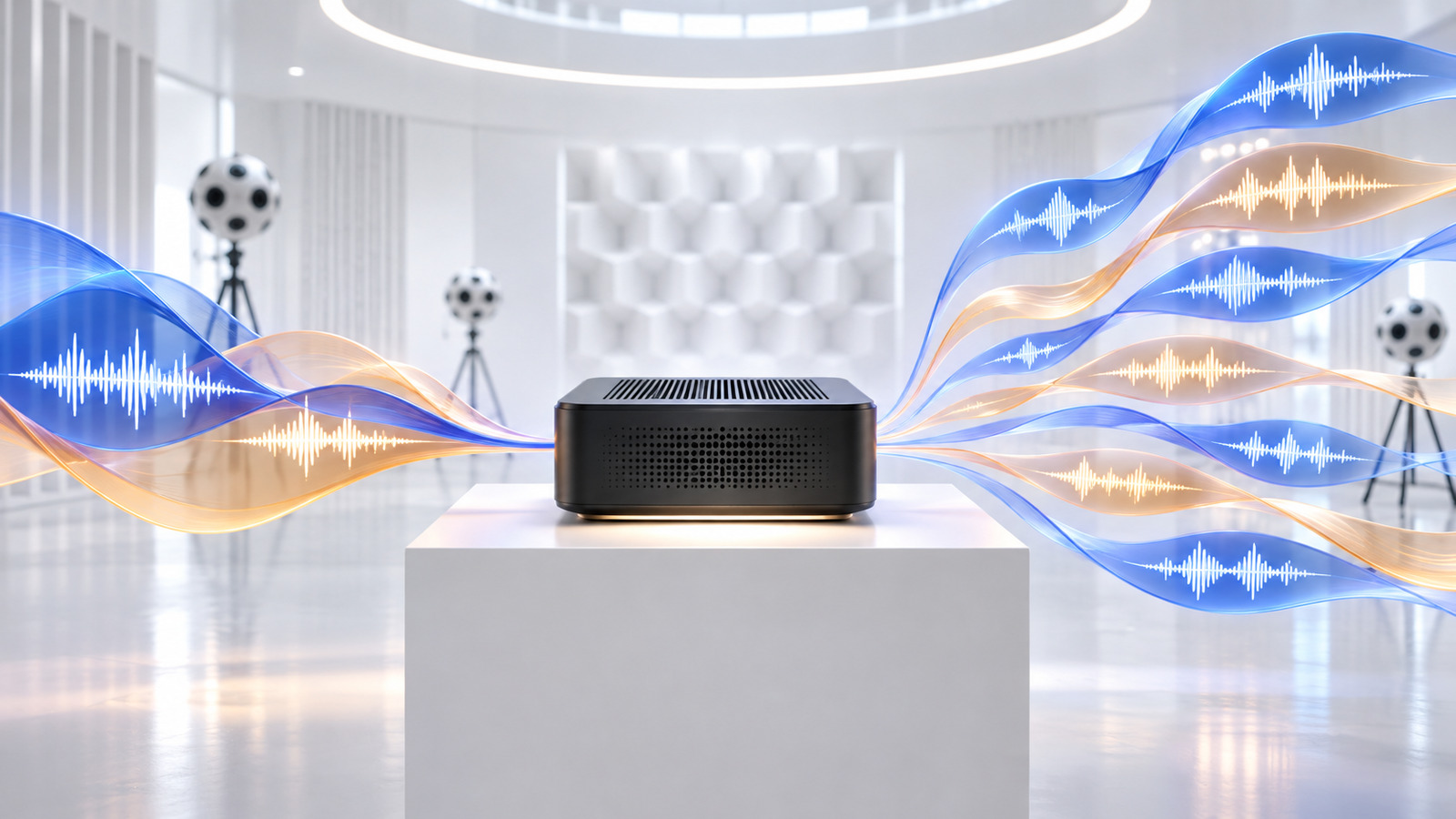
Reson8’s Apache 2.0–licensed Rumble‑2‑Flash model transcribes speech in 45 languages with 0.5 billion parameters and plugs directly into existing open-source stacks through Transformers and vLLM support.
AT A GLANCE
Key points
- The downloadable 0.5B model supports 45 languages under Apache 2.0.
- Native Transformers and vLLM support avoids a custom runtime.
- The provider cites 6.96% average multilingual error rate and 6.6% English WER.
What is changing?
Reson8 released Rumble‑2‑Flash, a 0.5-billion-parameter speech recognition model, through Hugging Face on November 18, 2026. The model card lists support for 45 languages, an Apache 2.0 license, and native integration with Hugging Face Transformers and vLLM. The weights are available to download, and automatic language detection can be used when no language is specified.
The model uses the Qwen3‑ASR architecture and was distilled from Reson8’s larger Rumble‑2 model through on-policy distillation. According to the provider, the GOLD alignment method enables token-level comparison even though the teacher and student use different tokenizers. The goal is to run in existing Transformers or vLLM installations without a custom runtime or trust_remote_code.
On the Hugging Face Open ASR Leaderboard, Rumble‑2‑Flash records a 6.96% average error rate across Chinese, German, French, Italian, Spanish, Portuguese, Hindi, Dutch, and English, and 6.6% WER on the English track. These are leaderboard measurements cited in the provider’s official announcement; outcomes can vary with hardware, batch size, audio quality, and evaluation set.
Alongside language selection, the model card exposes options for digit normalization, preserving filler words, and verbatim output. An auxiliary CTC head offers faster decoding at the cost of lower accuracy. This setup targets teams that want to add a small model to existing Python or vLLM infrastructure for local subtitling, multilingual interview transcription, or call-record indexing.
This report is prepared with AI assistance and checked against sources. Automated checks do not constitute human editorial review. Editorial approach
Explore the original sources
Source date: 18 November 2026.
Published by AI Radar: 18 Nov 2026, 18:05 (Istanbul, UTC+3).
FOLLOW THE TOPIC
Topics and tags
Share your discovery.
Send this story to a friend.
Reader comments
What do you think about this development? Share your experience or question. Comments are published after editorial approval.
Your name/nickname and comment become public if approved. Read: Privacy notice.





Loading comments…