Anthropic and Theorem report that Claude produced formal security proofs at the RISC‑V machine-code level for 239 fuzz-test entry points across 123 open-source libraries.
Microsoft and Hugging Face released the ThinkingBox training stack, which turns the final database state left by an agent into an executable reinforcement-learning reward.
OpenAI’s GPT‑6 Luna-powered Decisions API is now generally available for low-latency bounded decisions such as classification, routing and next-action selection in applications and agents.
AWS has updated Amazon Polly’s Generative speech engine with a new model aimed at more natural and accurate output, adding 14 voices and making Hindi and Finnish generally available.
NVIDIA’s new AIOps platform Minerva combines GPU, networking, storage and workload telemetry in a dynamic knowledge graph to detect anomalies and potential failures.
ForTy 2020 classifies every 10×10-meter patch of Earth into six forest and land-use types, while a 2017-2025 time series tracks conversions from natural forest to plantations or farms.
Flint uses a mixture-of-experts architecture with 39.8 billion total parameters and roughly 2.5 billion active per token, targeting codebase investigation, bug fixing, feature implementation, and test writing.
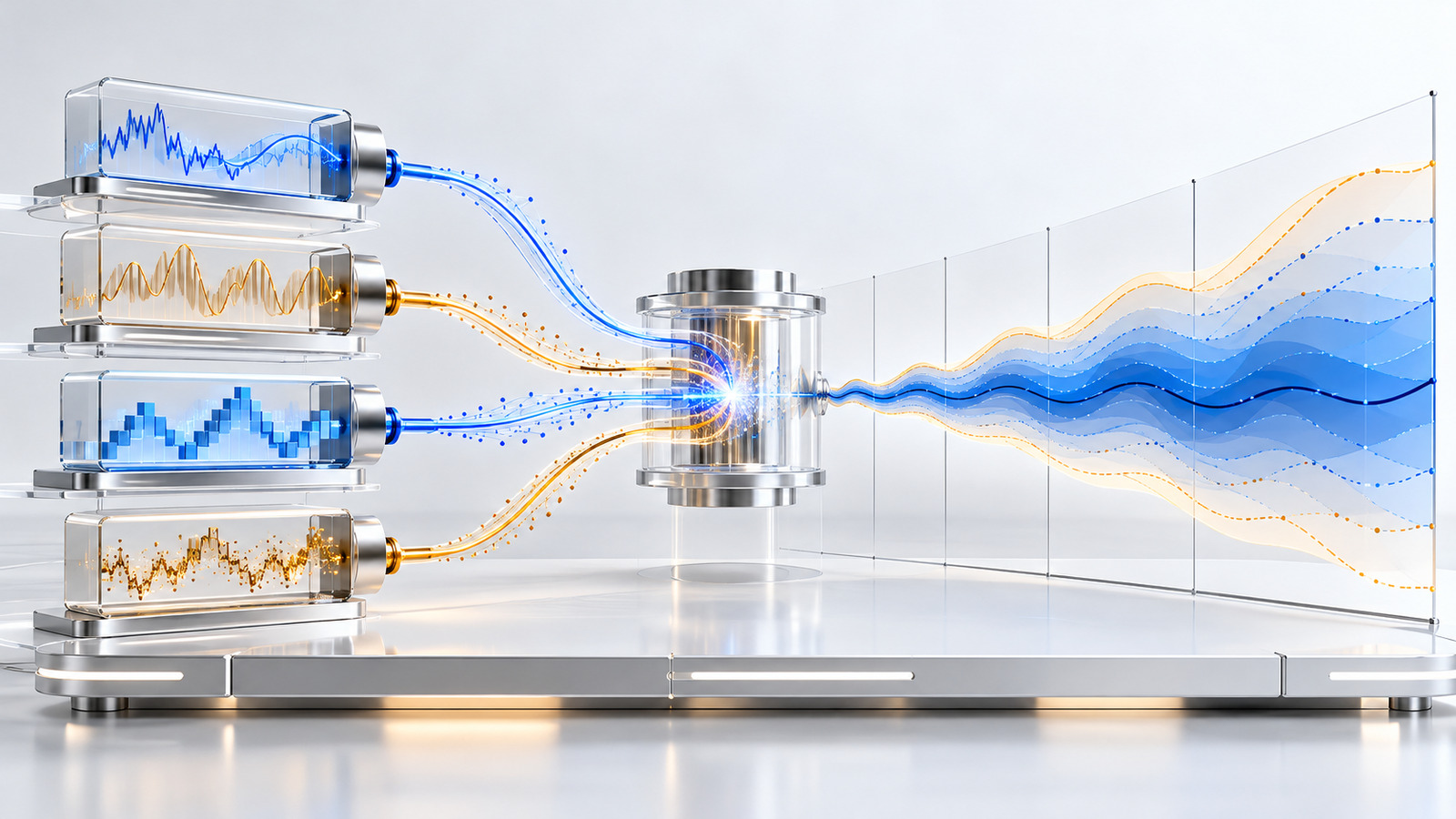
Granite Timeseries Ensemble R1 combines quantile forecasts from four open Granite forecasting models without retraining or distributing merged weights.
Physical AI Launchables provides a catalog of tested simulation, data-generation, training, and evaluation templates for Isaac Sim, CARLA, MuJoCo, AlpaSim, and Cosmos 3.
OpenAI has detailed a separate LLM architecture for ChatGPT Ads that tracks conversational context through stateful sessions and uses tool calls to retrieve, filter, rank, and auction ads.